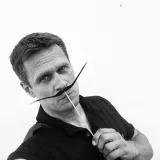
The Olympic Edge - Judo secrets applied to BJJ
It is easier to be a beginner among experienced. How to create and exploit a reaction.
I visited today Álvaro Riveros Gorriti’s Kami Martial Arts where Olympiad judoka Pasi Laurén taught a seminar The Olympic Edge - Judo secrets applied to BJJ.
Lately I have seen many seminars where judokas want to share their knowhow across the boundaries of sports, and I really like it - we are in the end one large family, even though BJJ has sleeker dōgi and bolder rashguards.
I have been taught Pasi Laurén’s knowhow through second-hand means from my friends who always talk a lot and praise Pasi’s technical skills and his particular and peculiar way of playing the stand-up game, so with squeaky knees I left the comfort of Espoo to Tampere to learn from the legend himself.
The seminar was divided into two two-hour sessions, where the first focused on foot techniques or as they say in judo, ashi-waza: ko-uchi-gari, o-uchi-gari, ko-soto-gari, o-soto-gari, sasae-tsurikomi-ashi. We did also dip quickly into hip throws. The aim was to learn how to execute the techniques well enough so that we could in the following practice get to train how to cause a reaction to our opponent, ready to be exploited.
In the half-time Álvaro offered us coffee and cookies, which hit the spot since I had started the day without a breakfast. We were philosophising on judo, jiujitsu - what they share and where they differ - and martial arts in general, and the attendees together had way over a century of experience, divided among four participants. Each of us had a long history of teaching, too, and we were talking about how odd the Finnish idea of basics is, and Pasi’s razor-sharp summary was ”it’s easier to be a beginner among the experienced”, which I have highlighted in my own teaching as well.
It is safer and easier for both to learn, when a beginner practices with an experienced colleague than when two beginners are put to try and figure it out together.
It was great to get to know both Pasi and Álvaro during this two hour break, and thus surprisingly (but not completely) painless started the next session, where Pasi taught how to create a reaction that can be exploited and how important relaxation is, and the Goldielocks timing: not too fast, not too slow.
Thank you so much for the day, Álvaro and Pasi, I hope our paths will cross again soon! It is was so great to be again and always a white belt and at the same time to see the similarities on production of power and use of central line to my first martial arts, karate.
Transcript
I was on the national team for seven to eight years, and then I was a teenager a little bit. Second man. During those years, I went round the European and World championships, and then I got also to go to the Olympics. '96. I took three years in Germany, I lived, I took into the Bundeslira, which is then and also Today, the world's second greatest judo series. So there are a lot of buying teams, there are Brazil and Japan and elsewhere like this Buyers all over the Bundesliga. They had really tough team shows. That team contest was awesome. I really liked it.
Transcript
Well, I'd leave you to believe the old champions who say, that power does not respond. That it's a bad idea. And in other words, it means that if a guy has a good defense, don't Never attacks a good defense. Always have to break that defense. Usually, you can also do it the way you stop attacking, so the couple focus on their own attack, and then no defense. It's usually enough, but today, what we did was that we leave. To attack one direction, and then we look at the reaction. And that reaction is always unique, and we have to sort of be able to live it. with the reaction. And then we always throw the other way. In that direction, at the moment when a couple does not yet have a defense, they have not recovered. About the first attack. And then we throw it the other way, where it has no defence at all. That this kind of thing basically works pretty far in practice. This is how we've turned around. Let the guy react. If we go, if we pull and hold and turn, then There's no defense. And we're not gonna let the couple react.
Transcript
One of the interesting things is that you have a dance school and you have a dance school. Dance school. What are the common things that the dancing lines can do with the struggle? What are the contact surfaces where they work best together? It's both the dance and the martial arts, the center, the center line, The rhythm and direction. These are the things we need to understand by ourselves and a couple of them. We just need to understand them, and then we need to be able to manipulate it. the guy's direction, rhythm, center, center line. When we have an understanding of this, it is only a question of what instruments we use. And what our goal is. It's the only one. Usually dancing is slightly easier just because the guy wants to do about that, what we want, and then in martial arts often not, but that understanding is quite Same. And then if that rhythm is missing, and that direction is missing, and you don't know your own or your friend's center, It just won't. So these are the scientific things we need to learn. I pull so much, the couple will have to take that step, otherwise they'll go to safety.
And our couple won't stay here, because if it stays, then I'll just keep moving. And I'm gonna throw a low utsi or something. But it has to get out of there somehow. And I've been pulling so far. Now I can get into trouble.
Transcript
- Hey, here's Álvaro next to me. What is your club called? - My club is called Kami Martial Arts, is located in Nekala, Tampere, Ahlmanintie 59 - Yes, and you had an interesting idea on how you wan to be building the society here around you Can you tell me a bit on what you want, what is the point of Kami Martial Arts? - Yes, what I want to build mostly is community located in the martial arts realm I want people to practice martials arts, yes, but I want them to feel integrated I want them to feel involved, I want them to feel like they have friends here. And regardless of what their goals are the main thing what I want them to feel is that they have friendship they have a community, and they have a place to be here - And in judo it was called, what was it called this goal for common good? It's called, the term is Jita-kyoei, it means pretty much "you improve, I improve" That's what we want. We want to improve together, because if I have the students who don't improve, I won't improve And at the same time if I don't improve myself they won't be able to get anything better - Thank you Álvaro, it was really a to be meeting you in here, in Kami Martial Arts, in Tampere And looking forward to be practicing with you in the future. - Looking forward to it, thank you very much!